
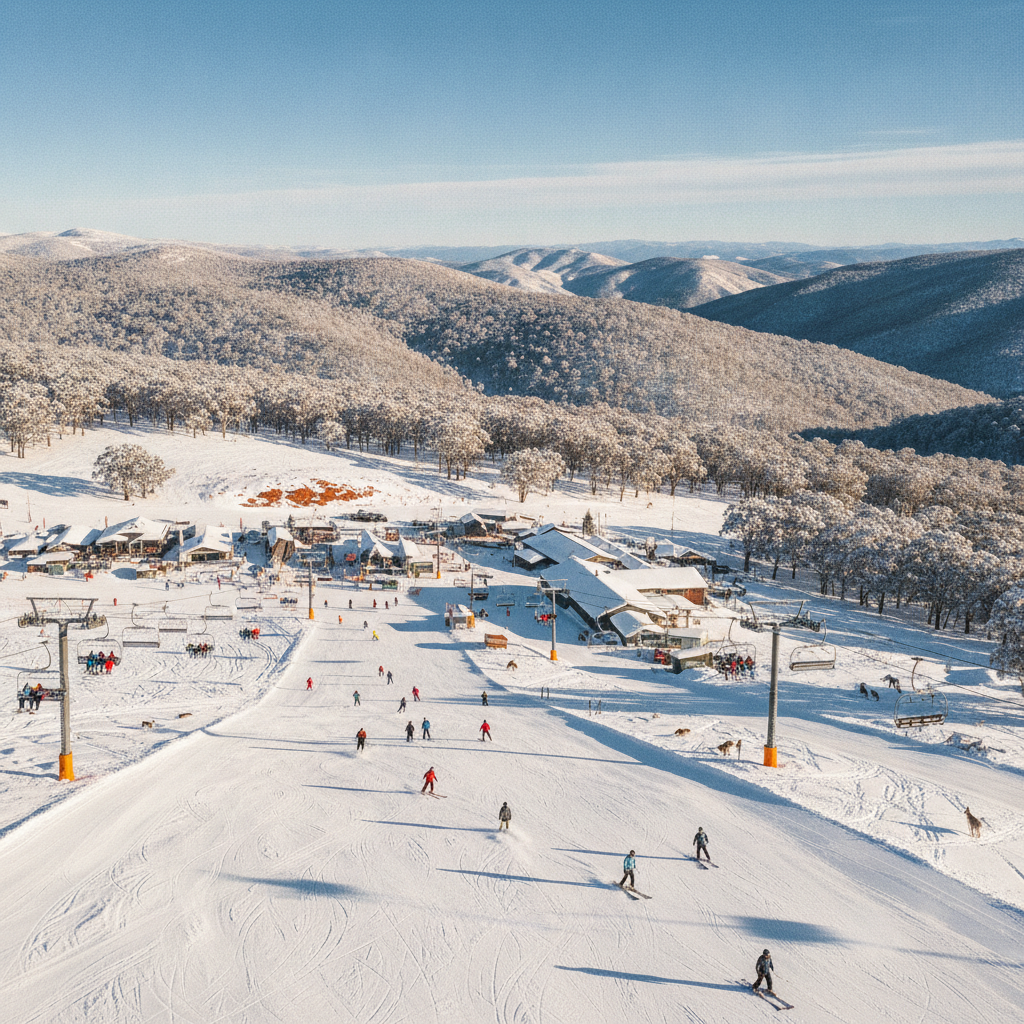
There is no calendar week that guarantees the snow or terrain you want at an Australian ski resort. A useful travel window depends on your destination, the season’s conditions, the activities you have booked and how flexible your plans can be. Choose dates by matching those factors to your holiday, then keep checking the resort’s updates.
Opening dates are planning dates
An advertised winter opening does not mean every lift, trail or lesson program will operate from that day. Individual areas can open later or close earlier, and operating plans can change. Before paying for a first-time ski trip, confirm the intended dates of the beginner area and the specific lesson program you need.
For example, Perisher publishes lesson operating information with a snow-conditions qualification. Check the season and year shown on a page rather than relying on an old offer in a search result. An accommodation booking and a resort lesson booking may also have different amendment rules.
Early winter
If you are considering June or the start of the advertised season, treat available terrain as something to verify. Book because the trip’s likely range of activities suits you, rather than expecting the whole mountain to be open. Ask whether your lesson is confirmed and what happens if the booked program cannot run.
For a group that includes non-skiers, check the separate winter activity calendar. Scenic access, events and indoor facilities may follow different schedules from skiing. Do not assume an activity advertised for the destination operates on your particular dates.
School holidays and midwinter
July and August are common dates to compare for a ski-focused trip, but the month alone is not a snow forecast. If your dates coincide with school holidays, investigate lesson capacity and accommodation before locking in the rest of the journey. Thredbo’s beginner guide warns that peak dates can sell out and recommends arranging lessons and lift access together.
Check the school calendars relevant to your group and destination. If dates are flexible, compare a weekday stay with your preferred weekend using the full trip cost. A cheaper package is useful only if its lesson, transport and cancellation arrangements work for your party.
September and late-season travel
A September trip needs a fresh check of operating plans. Resort areas and services may finish on different dates, so do not treat an advertised season end as a promise that your chosen lift or lesson will continue until then. Keep non-refundable commitments in proportion to how much your holiday depends on skiing.
Our NSW spring skiing guide explains the checks to make for Thredbo and Perisher. For another state, use that resort’s own information rather than transferring NSW assumptions to a different mountain.
Check conditions in a useful order
Start with the resort’s operating notice, then look at lift and trail status, the weather forecast and travel updates. Perisher’s reports and Thredbo’s lifts and trails are useful starting points. A photograph or a snow-depth number cannot tell you whether your booked activity is running.
Recheck before travelling and again on the day. If your priority is first lessons, verify the learning area and meeting arrangements. If it is a wider choice of skiing, examine the operating terrain. Match the evidence to your plans rather than looking for a single ‘best snow’ date.
Choose accommodation to match the trip
Compare Jindabyne accommodation with Perisher or Thredbo stays on our Australian sister site. Confirm the booking conditions and daily travel arrangements before choosing your dates.